











MKS Trade – Multi-Channel E-commerce Order Management Platform
Project Overview
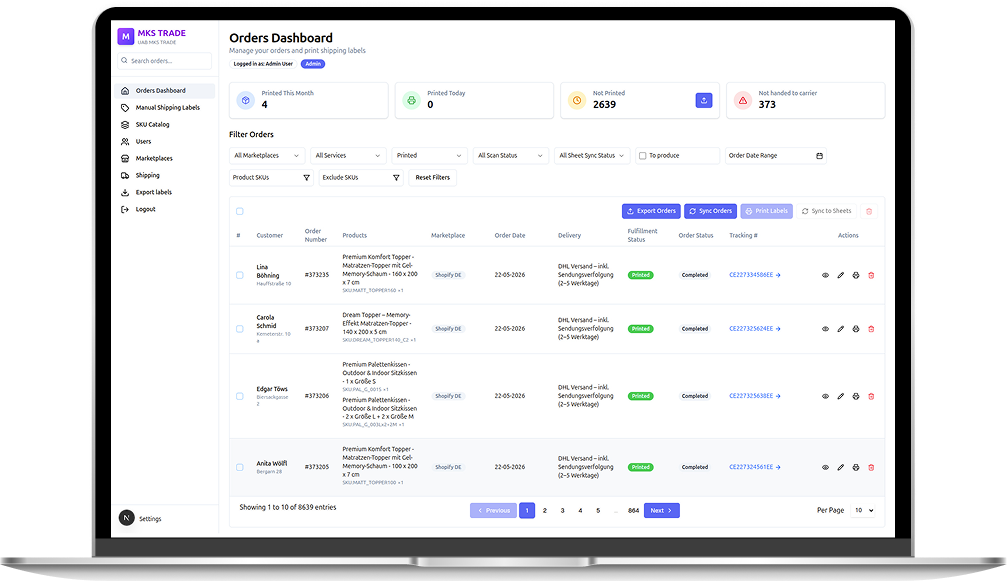
This platform helps e-commerce businesses manage orders from multiple online stores — such as Shopify, Amazon, and others — in one simple dashboard. Orders are automatically collected and shown clearly, with quick statistics, easy filters, and search to find what you need fast.
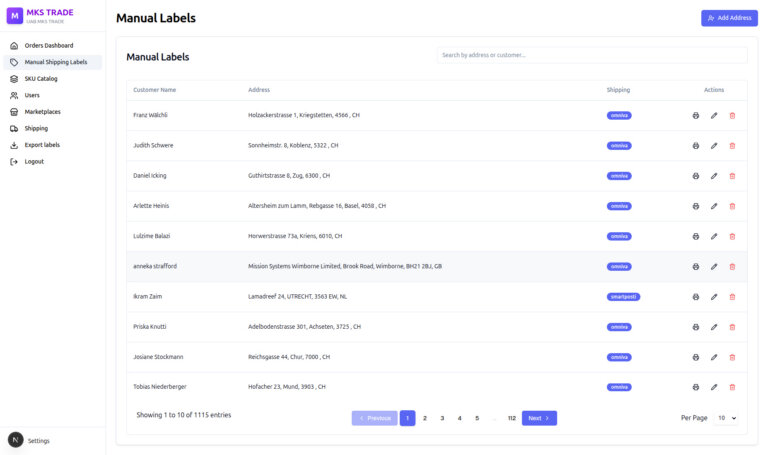
Warehouse managers can view full order details, make changes if required, and print both shipping labels and packing slips for one order or up to 500 orders at once. Instead of waiting a long time for labels to generate and download separately from each carrier’s website, the system handles everything smoothly in the background so users can continue working without delays. A separate history section tracks all printed labels, showing daily and monthly totals for easy monitoring.
E-commerce
12-16 Weeks
Lithuania
Web Development
Development Challenges
Building this unified order management platform presented several hurdles, primarily due to the need to integrate diverse e-commerce marketplaces and shipping carriers into a seamless system. Each platform had its own rules, data formats, and technical requirements, which complicated synchronization, automation, and error handling. Additionally, managing high volumes of orders while ensuring fast, reliable performance required creative problem-solving to avoid delays or disruptions. Our team navigated these issues through iterative testing, close collaboration with the client, and leveraging efficient tools to deliver a robust solution on time.
Synchronizing thousands of orders across platform
Automatically fetching and updating large volumes of orders from sources like Shopify and Amazon was complex, especially handling real-time changes such as cancellations via webhooks — requiring constant monitoring to mark orders accurately without data loss or duplicates.
Merging bulk printed labels into a single PDF
Processing up to 500 orders at once for printing involved validating each one, generating shipping and packing labels, and combining them efficiently into one file, which demanded optimizations to prevent long wait times or file errors.
Navigating customer support for errors
Resolving integration issues often meant dealing with slow or inconsistent support from marketplaces and shipping carriers, prolonging debugging and requiring workarounds for undocumented API behaviors.
Securing PII access for Amazon's SP-AP
To enable order fetching from Amazon, we had to submit detailed Personally Identifiable Information (PII) compliance documentation, which added regulatory hurdles and delayed initial setup.
Managing diverse authentication methods
Each marketplace used unique token generation processes — such as SSO logins, refresh tokens, or API keys — making secure, ongoing connections challenging and increasing the risk of access interruptions.
Our Solution
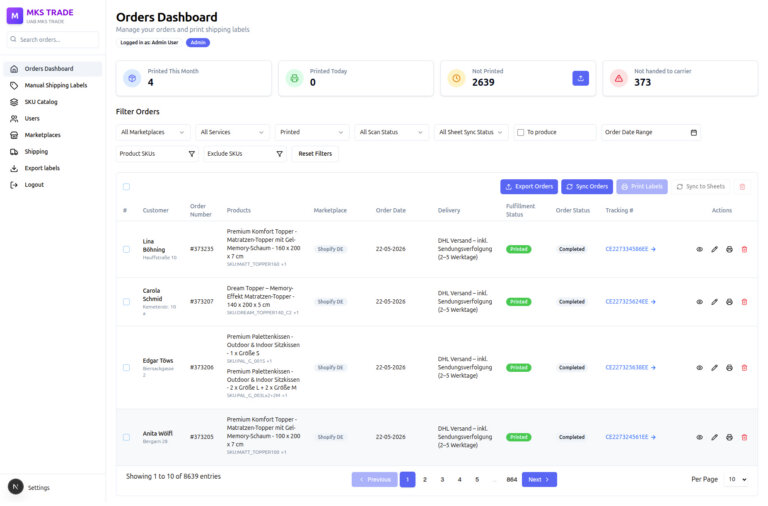
Centralized order dashboard
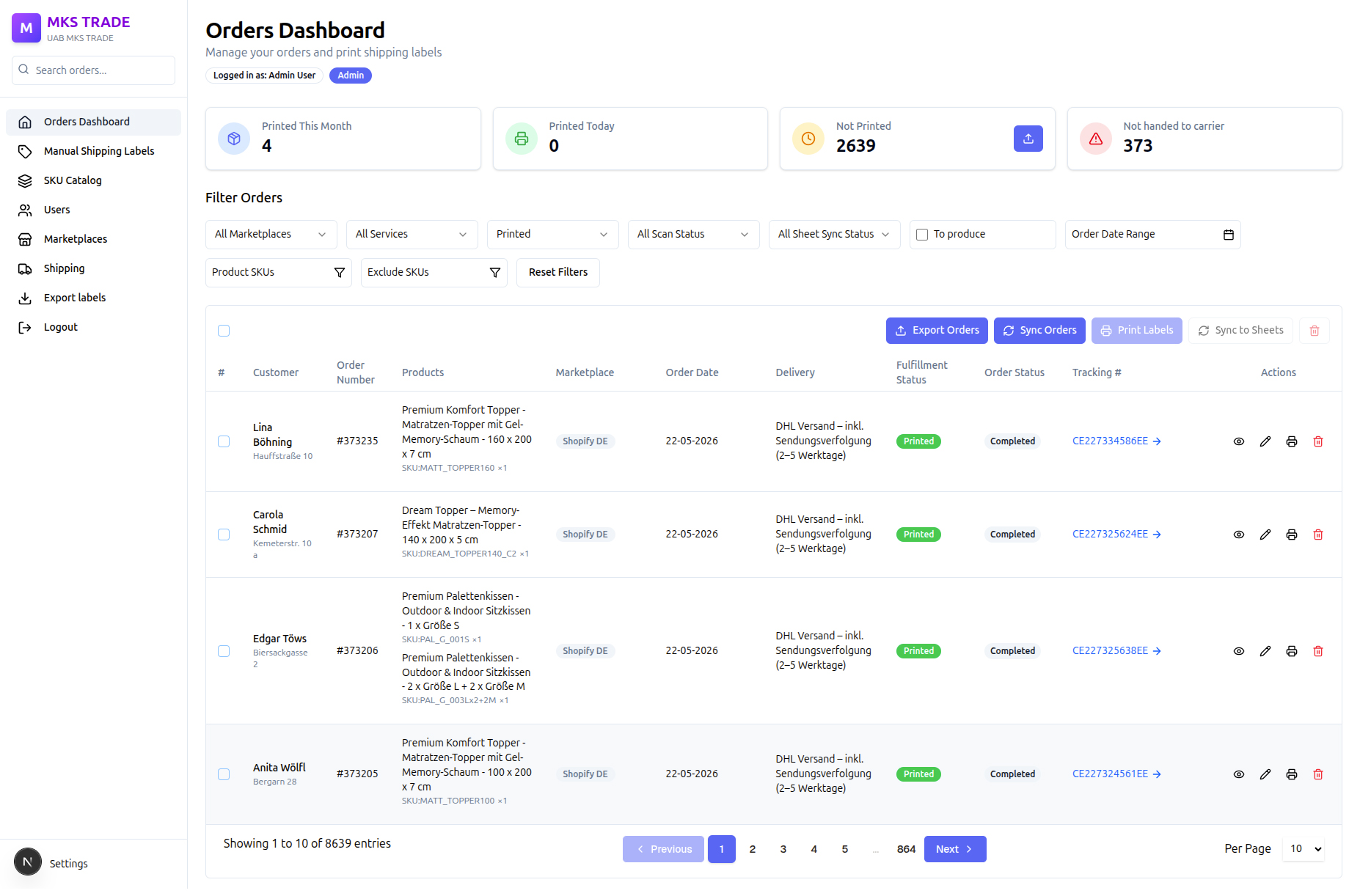
All orders from Shopify, Amazon, and other marketplaces appear in one place with real-time statistics (e.g., total orders, pending, shipped), powerful filters, and instant search to locate any order quickly.
Bulk label printing (up to 500 orders)
Select multiple orders and start the process with one click; the system handles validation, carrier API calls, label creation, packing slips, and PDF merging automatically in the background — no long waits or browser freezes.
Background automation for heavy tasks
Order syncing, status updates (including cancellations via webhooks), and label generation run quietly behind the scenes, keeping the dashboard responsive even during peak hours.
Printed labels history dashboard
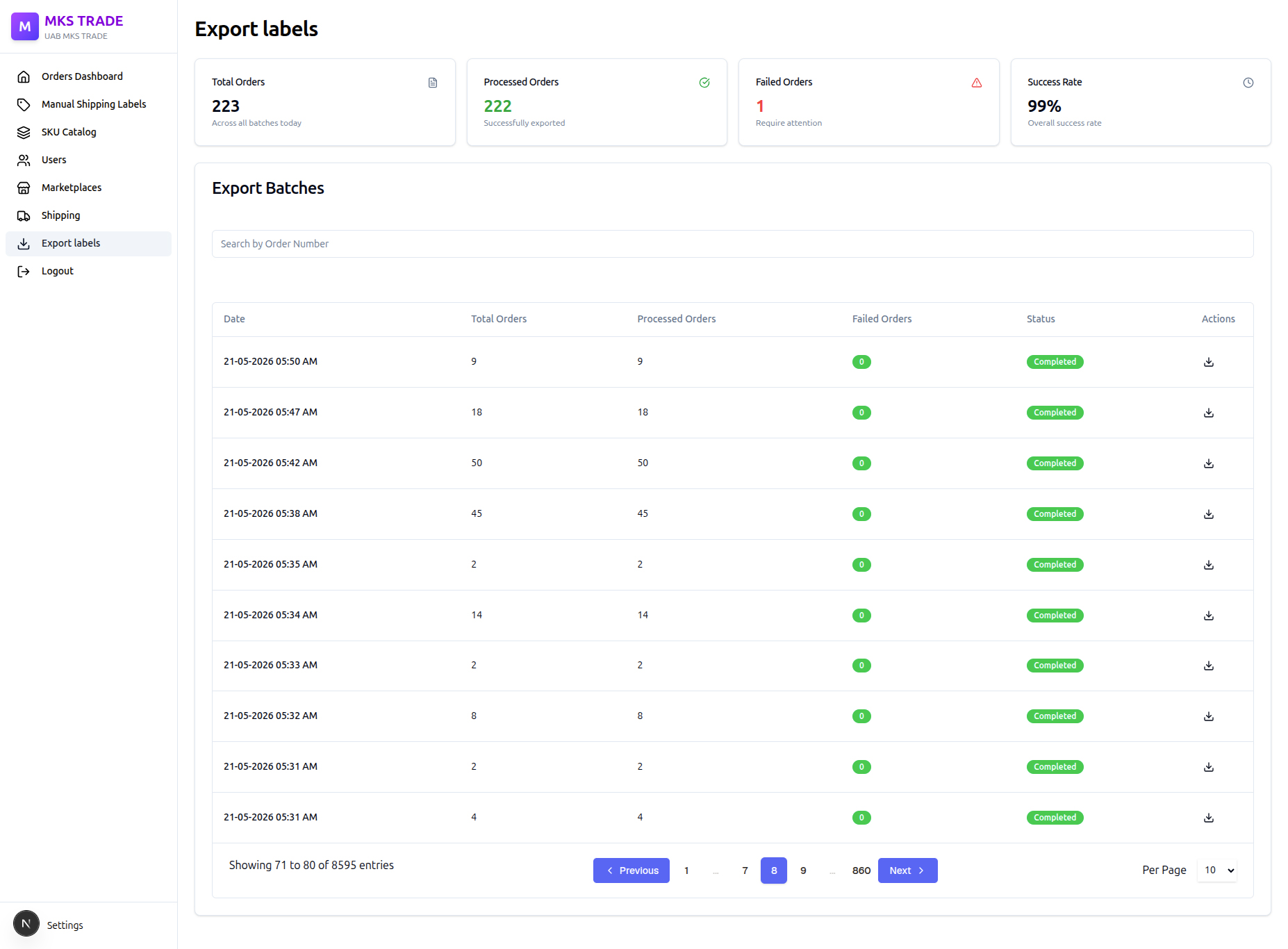
As the client was non-technical we suggested this approach to eliminate the long wait after clicking on print labels. A separate view showing every batch printed, with counters for today and this month, timestamps, order counts, and quick access to re-print or review past jobs.
Key Features
Centralized order dashboard
All orders from Shopify, Amazon, and other marketplaces appear in one place with real-time statistics (e.g., total orders, pending, shipped), powerful filters, and instant search to locate any order quickly.
Bulk label printing (up to 500 orders)
Select multiple orders and start the process with one click; the system handles validation, carrier API calls, label creation, packing slips, and PDF merging automatically in the background — no long waits or browser freezes.
Background automation for heavy tasks
Order syncing, status updates (including cancellations via webhooks), and label generation run quietly behind the scenes, keeping the dashboard responsive even during peak hours.
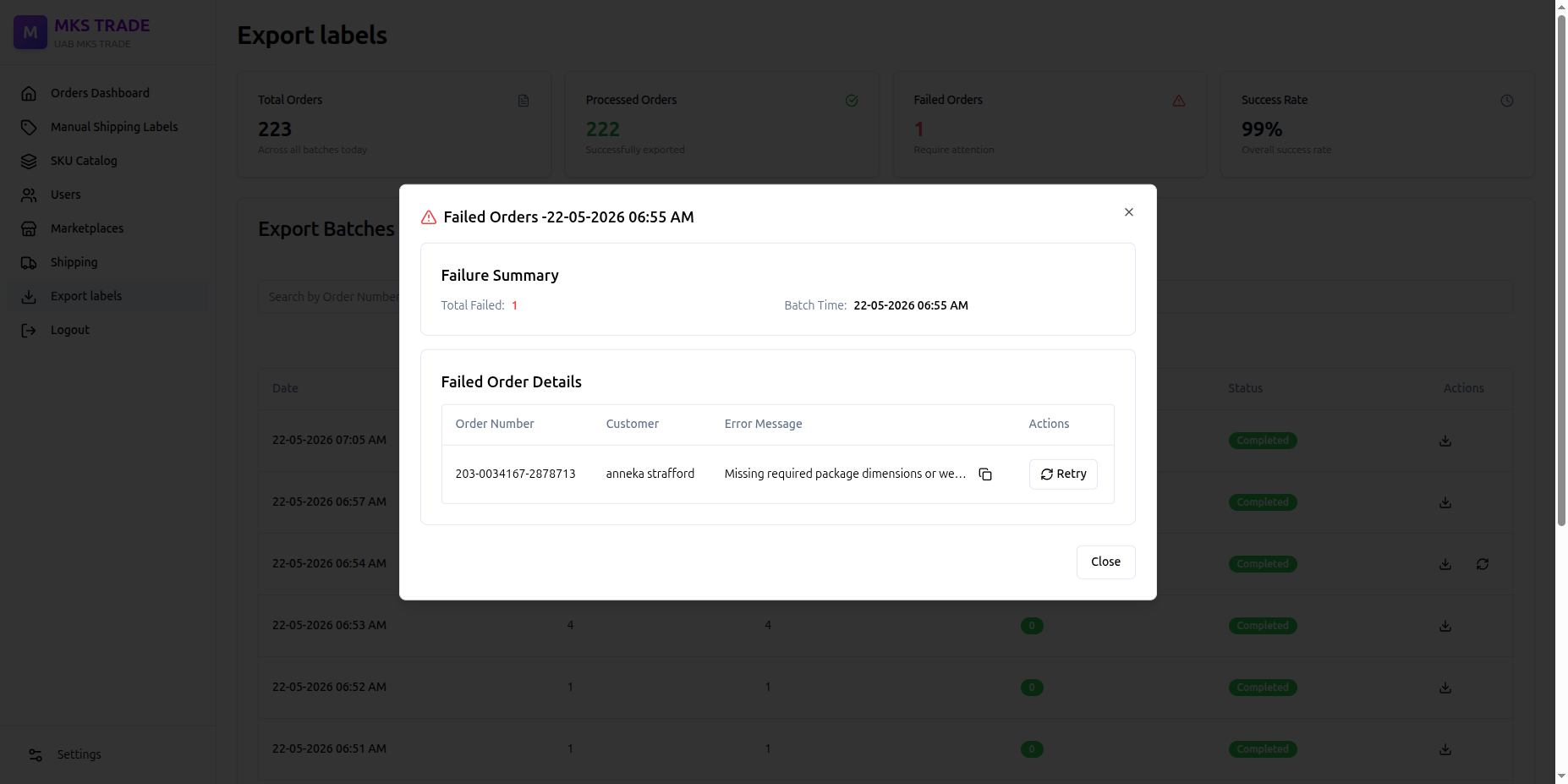
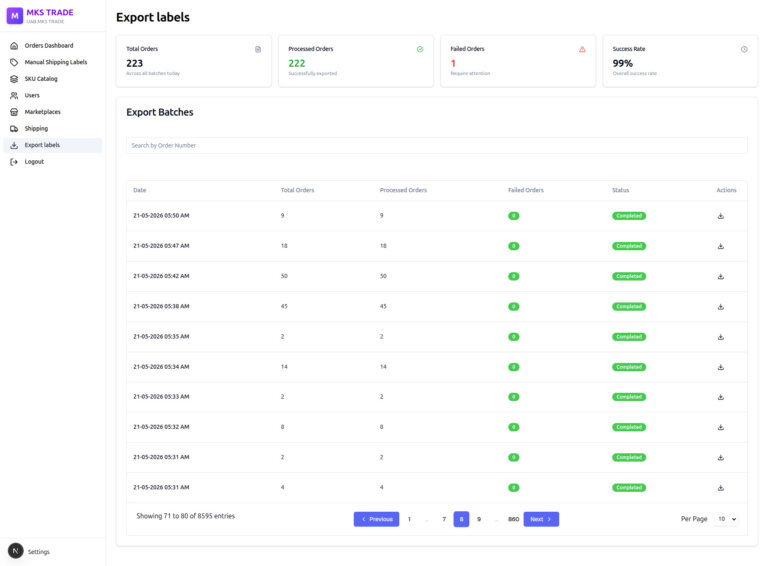
Printed labels history dashboard
As the client was non-technical we suggested this approach to eliminate the long wait after clicking on print labels. A separate view showing every batch printed, with counters for today and this month, timestamps, order counts, and quick access to re-print or review past jobs.
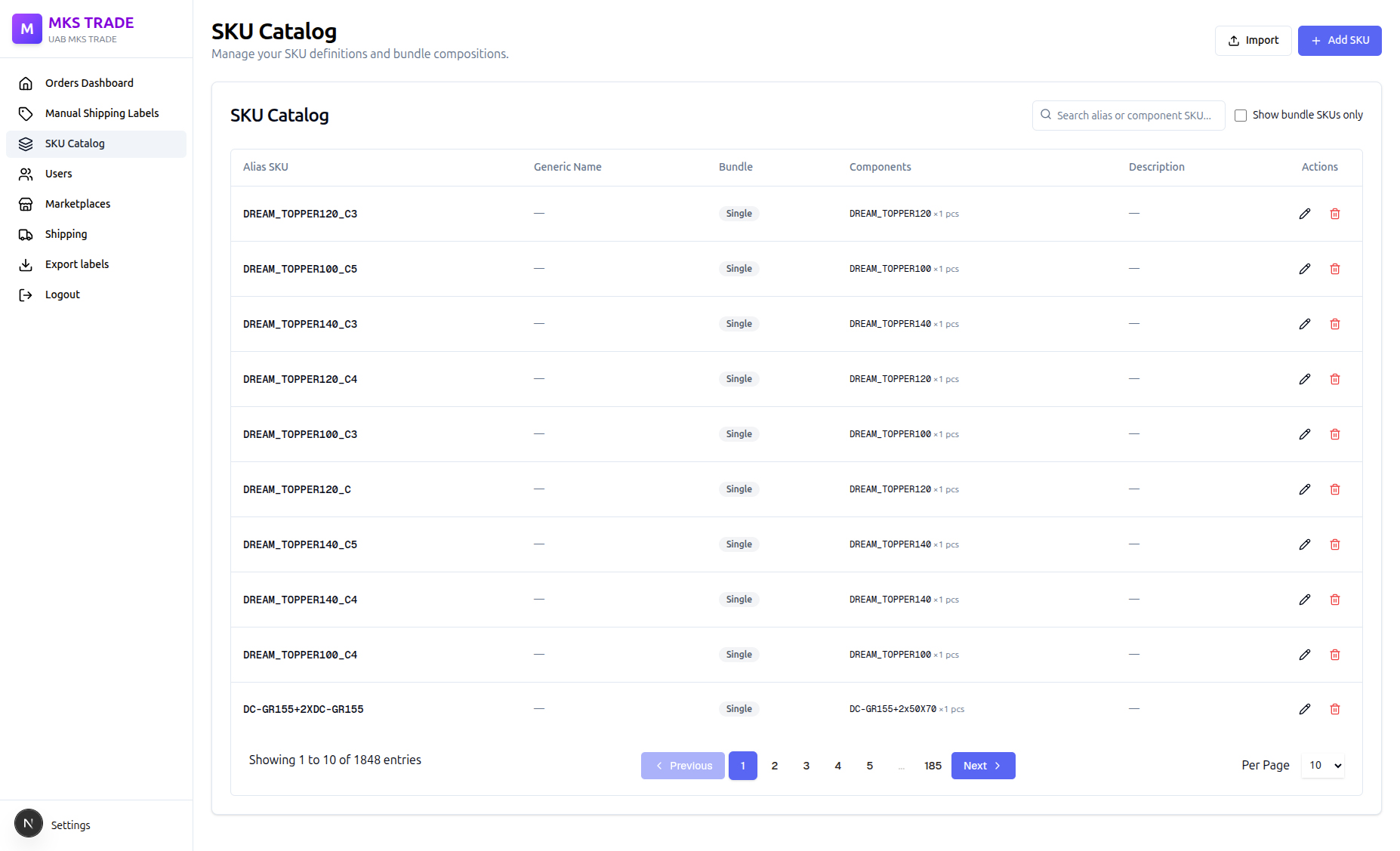
User & role management
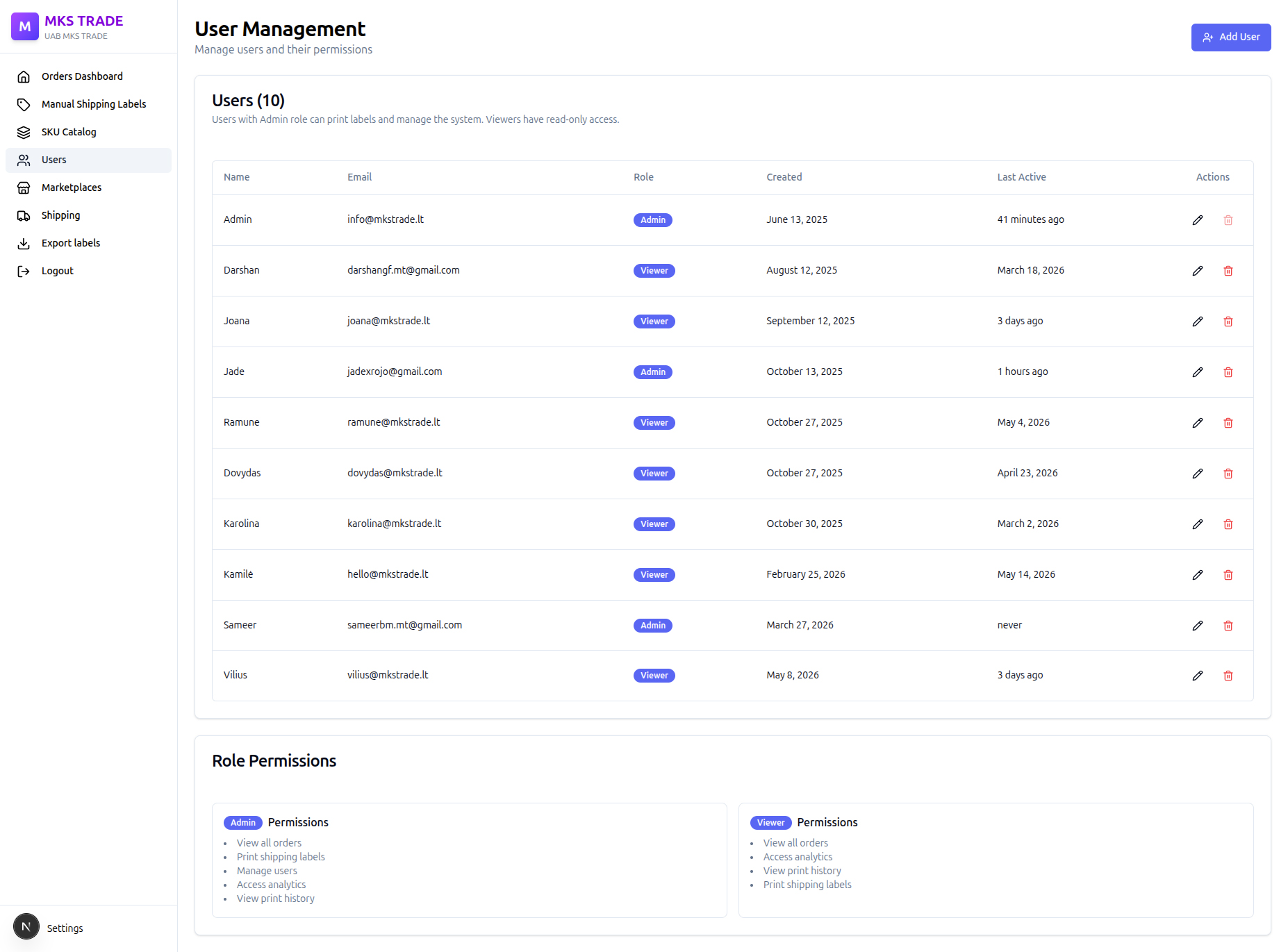
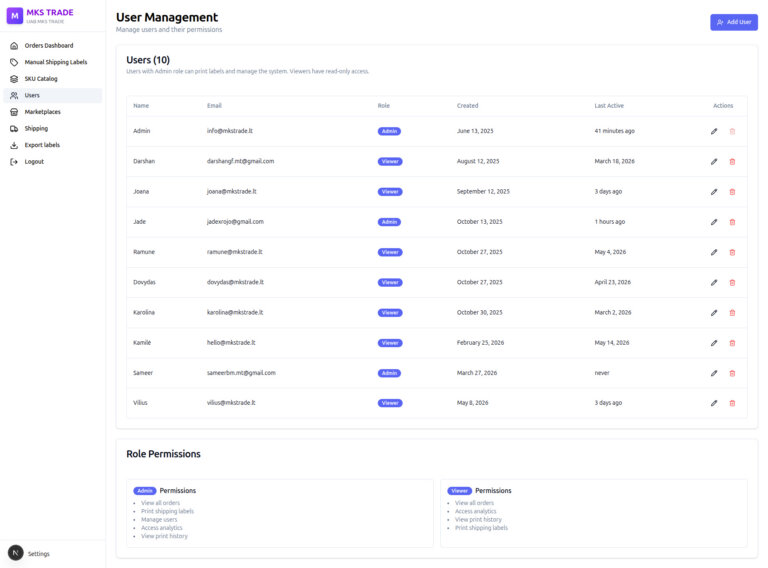
Simple controls to define who can view orders, edit details, print labels, or access reports — ensuring the right team members have the right permissions.
Built for effortless scalability & future growth
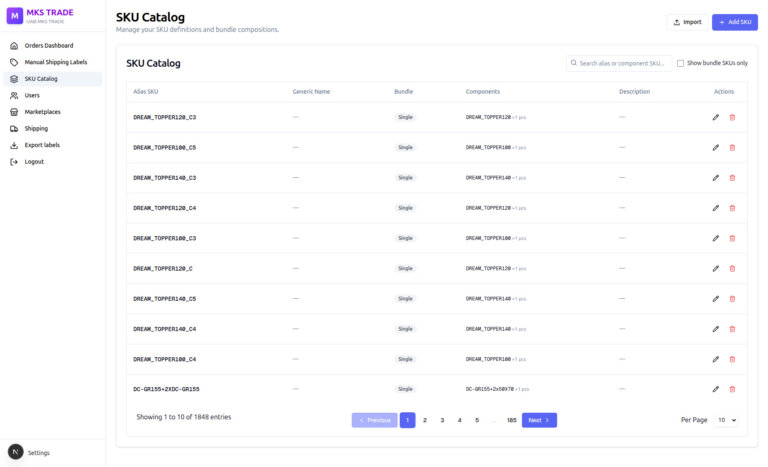
API credentials for all marketplaces and shipping carriers are securely stored and encrypted in the database. When the client wants to connect a new marketplace (or carrier), they simply add the configuration details through an admin interface — no code changes, deployments, or developer involvement needed. The system automatically begins syncing orders from the new source, ensuring the platform can expand seamlessly as the business adds more sales channels.
Our Approach
Our E-commerce Order Management Platform Development Blueprint
We adopted a lightweight Agile development approach tailored for efficiency and flexibility. We worked in short 1-2 week sprints, held quick daily stand-ups (often via chat or short calls), and conducted brief sprint reviews and retrospectives with the client every 1-2 sprints.
Concept & Inception (Discovery Phase)
Collaborated with the client to fully understand pain points, map manual workflows, define must-have features (dashboard, bulk printing, history), user roles, and success criteria. Prioritized the product backlog into epics (e.g., “Order Syncing”, “Bulk Label Processing”) and created initial wireframes and user stories.
Design & Architecture
Defined overall system structure (backend services, database models, frontend components, queue system for background jobs) early on, then refined iteratively per sprint. Created detailed designs only for the current sprint’s scope to stay flexible.
Development & Implementation
Built features incrementally: coded backend APIs and integrations, developed React frontend components, and implemented background processing. Paired programming or frequent reviews ensured alignment between the two team members.
Continuous Testing & Quality Assurance
Integrated testing throughout: unit tests for critical logic (e.g., PDF merging, validation), integration tests for APIs/webhooks, manual end-to-end testing in sandbox environments, and client demo/testing after each sprint. Caught and fixed issues early to avoid big rework.
Review, Demo & Retrospective
At the end of each sprint, demonstrated working features to the client for feedback. Held short retrospectives to discuss what went well, blockers (e.g., carrier API issues), and process improvements — adjusting backlog or approach as needed.
Operations & Continuous Improvement
Post-launch, monitored performance (queues, sync reliability), handled bug fixes, and incorporated client-requested enhancements in ongoing short sprints or maintenance cycles.


Business Impact
Transforming Warehouse Efficiency and Driving Measurable Growth for the Client
Since implementing the custom order management platform, the client has experienced a dramatic shift from a time-consuming, error-prone manual fulfillment process to a streamlined, automated workflow. This efficiency gain has freed up significant staff time, reduced operational stress during peak seasons, lowered costly mistakes like wrong shipments or returns, and accelerated order turnaround. As a result, the business can handle higher order volumes without adding headcount, improve customer satisfaction through faster and more accurate deliveries, and focus more energy on growth initiatives like expanding product lines or marketplaces.
Significant time savings01
Warehouse team reduced daily label processing and printing time by 70–80%, reclaiming hours previously lost to manual carrier portal navigation and file handling.
Lower error rates & reduced returns02
Automated validation, correct label generation, and consistent packing slips minimized shipping mistakes, cutting return-related costs and customer complaints.
Faster order fulfillment03
Bulk background processing enabled quicker pick-pack-ship cycles, leading to same-day or next-day shipping for more orders and improved delivery performance.
Increased daily/peak capacity04
The system reliably handles growing order volumes from multiple marketplaces without proportional increases in effort or staffing.
Summary
MKS Trade is a custom e-commerce order management platform that centralizes orders from Shopify, Amazon, and other marketplaces. It streamlines order fulfillment through automated synchronization, bulk label printing, packing slips, and efficient warehouse workflows, enabling faster and more reliable order processing.
Transform Your Ideas into High-Impact Digital Solutions
Helping businesses across industries innovate, optimize, and scale with cutting-edge software development.